What Is the NDACC Network? Inside the Global Atmospheric Lidar Community
Step outside on a clear day and you’ll barely give the air above you a second thought. Yet somewhere between 10 and 50 kilometres overhead, the stratosphere is quietly doing something remarkable: shielding us from ultraviolet radiation, regulating our climate, and slowly recovering from decades of chemical damage. So who actually measures all of this? The answer, in large part, is the NDACC network — a global collaboration of scientists who use lasers, satellites and ground-based instruments to keep watch on the atmosphere. Here at ndacc-lidar.org, we want to explain how this network works, why it matters, and how the United Kingdom plays a central role in it.
The Origins and Mission of NDACC
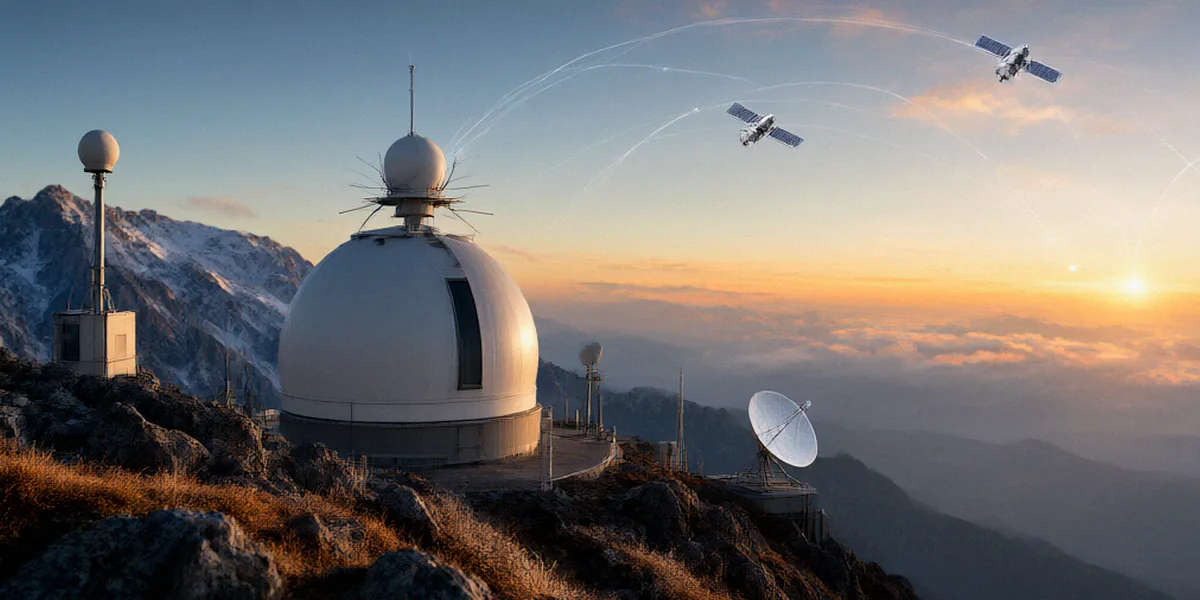
NDACC stands for the Network for the Detection of Atmospheric Composition Change. It’s an international research network that coordinates measurements of ozone, aerosols, trace gases and temperature throughout the stratosphere and troposphere. Its core mission is simple to state but difficult to achieve: detect long-term changes in atmospheric composition, and separate genuine trends from natural variability.
From NDSC to NDACC: A Short History
The network was founded in 1991 as the Network for the Detection of Stratospheric Change (NDSC), created in response to growing concern about ozone depletion and the Antarctic ozone hole. In 2005, it was renamed NDACC to reflect a broader remit that now includes tropospheric chemistry and climate-related variables. That rename wasn’t cosmetic — it signalled a shift from a stratosphere-focused ozone watch to a comprehensive atmospheric composition monitoring programme.
Why Long-Term Atmospheric Monitoring Matters
Atmospheric changes unfold over decades. A single measurement tells you almost nothing about whether ozone is recovering or whether aerosol loading is shifting. What matters is a consistent, calibrated record stretching back years — ideally decades. NDACC exists precisely to provide that record, giving scientists, policymakers and the public a reliable baseline against which to judge change.
How Atmospheric Lidar Works
Lidar — light detection and ranging — is one of NDACC’s most powerful tools. The principle is straightforward: fire a pulsed laser into the sky, then measure the tiny amount of light that scatters back off molecules, aerosols and clouds. The timing and intensity of those returns tell you what’s up there and at what altitude.
The Physics Behind Lidar Returns
When a laser pulse travels upward, a small fraction of its photons collide with atmospheric particles and bounce back toward the instrument. By recording the return time, we calculate distance; by recording intensity, we infer density and composition. Different wavelengths interact differently with different molecules, which is what makes lidar so versatile.
Differential Absorption Lidar and Ozone Retrieval
Differential absorption lidar (DIAL) takes this a step further. It fires two closely spaced wavelengths — one that ozone absorbs strongly, one that it doesn’t. The difference in backscattered signal between the two reveals how much ozone lies along the beam path. This gives us vertical ozone profiles with impressive precision. In the UK, much of this work has been pioneered at the Rutherford Appleton Laboratory, with a key operational lidar hosted at the Chilbolton Observatory in Hampshire.
NDACC’s Global Network and Measurement Stations
NDACC comprises roughly 70 stations spread across the globe, from the Arctic to the Antarctic, from sea level to high-altitude observatories. Each station contributes measurements using a mix of lidar, Fourier-transform infrared spectrometers, Dobson and Brewer spectrophotometers, and microwave radiometers.
Key Stations in Europe and the UK
Europe hosts several NDACC stations, and the UK’s contribution runs through the Chilbolton Observatory, which hosts a key NDACC lidar station. The University of Manchester is also an active UK contributor, working on instrument development and data analysis. Together, these sites help anchor the European segment of the network.
Data Sharing and Quality Assurance
Every NDACC station follows strict protocols for calibration and uncertainty reporting, coordinated in part with the World Meteorological Organization. Data feeds into a central archive where it is freely available to researchers worldwide. Quality assurance isn’t glamorous, but it’s the reason NDACC data can be trusted across decades.
Ozone Monitoring and Stratospheric Science
Ozone remains NDACC’s flagship measurement. The network’s lidar and spectrophotometer records have tracked the rise and slow decline of ozone-depleting substances since the early 1990s, providing independent evidence that the Montreal Protocol is working.
Tracking the Ozone Hole and Recovery
The Antarctic ozone hole still forms each spring, but NDACC data supports the Montreal Protocol’s assessment of ozone layer recovery, showing that stratospheric ozone is gradually rebuilding. Full recovery is expected mid-century, but only if international controls hold.
Stratospheric Temperature and Aerosol Trends
Beyond ozone, NDACC measures stratospheric temperature and aerosol loading. These matter because volcanic eruptions, wildfires and even rocket launches can perturb the stratosphere. Long-term records help distinguish human-driven trends from natural events.
Why NDACC Matters for the United Kingdom
The UK is not a passive participant in NDACC. British institutions contribute instruments, data and scientific leadership, and the resulting observations feed directly into national policy.
UK Contributions to NDACC
Institutions such as the National Centre for Atmospheric Science (NCAS) and the University of Leeds carry out NDACC-related research, from instrument calibration to trend analysis. The Chilbolton Observatory provides a physical home for UK lidar measurements, while the University of Manchester contributes expertise in retrieval algorithms and validation.
Policy and Public Health Implications
The Met Office and DEFRA use NDACC observations to inform UK air quality and climate policy. Ozone in the stratosphere protects public health by limiting UV exposure, while ozone at ground level is a harmful pollutant. Understanding both requires the kind of long-term, high-quality data NDACC provides.
Getting Involved and Accessing NDACC Data
One of NDACC’s strengths is openness. Researchers, students and curious members of the public can all access the network’s data and tools.
Data Access and Tools
The official NDACC website hosts a public data archive with search tools, station metadata and documentation. You can download ozone profiles, temperature records and aerosol measurements, often within minutes.
Collaboration and Funding Opportunities
UK universities and research councils regularly advertise PhD studentships, postdoctoral positions and collaborative projects linked to NDACC. If you’re an early-career scientist, this is a genuinely welcoming community.
- Explore the NDACC data archive on the official website
- Contact UK institutions such as NCAS, Leeds or Manchester about research opportunities
- Follow NDACC station news for updates on ozone and stratospheric trends
- Attend international NDACC meetings and workshops to connect with the community
FAQ
What does NDACC stand for?
NDACC stands for the Network for the Detection of Atmospheric Composition Change. It was founded in 1991 as the Network for the Detection of Stratospheric Change (NDSC) and renamed in 2005.
Where is the UK’s NDACC lidar station?
The Chilbolton Observatory in Hampshire hosts a key NDACC lidar station, supported by UK research institutions including the University of Manchester and NCAS.
How does lidar measure ozone?
Differential absorption lidar fires two wavelengths — one absorbed by ozone and one not — and compares the backscattered signals to derive a vertical ozone profile.
Why does NDACC matter for UK policy?
The Met Office and DEFRA use NDACC observations to inform UK air quality and climate policy, and the data underpins international assessments such as the Montreal Protocol’s ozone recovery reports.
Can the public access NDACC data?
Yes. NDACC data is freely available through the network’s official data archive, along with documentation and analysis tools.
NDACC is far more than a scientific network — it’s a vital UK and global asset for understanding how our atmosphere is changing. From the lidar at Chilbolton to the researchers at Manchester, Leeds and NCAS, British science sits at the heart of this effort. We’d encourage you to explore the data, follow the science, and get involved.